
| home page | the collection | news | reviews | contact | education resources | links |
Library of Wales news
Mapping the Territory Now Available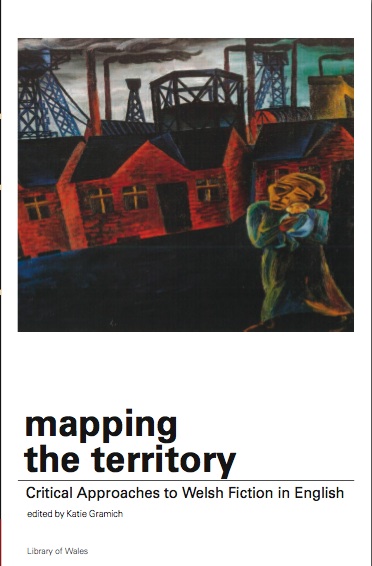
 After a successful Christmas launch at Chapter Arts Centre, Mapping the Territory: Critical Approaches to Welsh Fiction in English edited by Dr Katie Gramich is now available to peruse, borrow, lend, study and purchase.
 "This book may be considered as the second stage in the crucial campaign to raise the profile of Welsh writing in English both within Wales and in the wider world. The first stage was the foundation of the Library of Wales series, and now that these largely forgotten works have been republished, it is possible for us to use them for teaching purposes in universities.
"We are left with the problem that critical material on these texts is scarce and, in some cases, non-existent. There is a demonstrable need on the part of undergraduate and postgraduate students for a critical book focusing specifically on a range of Library of Wales titles which will both introduce them to the field of twentieth-century Welsh fiction in English and demonstrate the varying critical approaches that can be used to analyse these texts.
"The book is a multi-authored work with its origins in the Association for Welsh Writing in English, which will include essays by both established leaders in the field, such as Professors Knight, Thomas, and Brown, and new, cutting-edge research by young scholars at the outset of their academic careers, such as Morse, Wainwright, and Hendon."
Katie GramichTuesday, January 04, 2011
Library of Wales Goes to Ireland
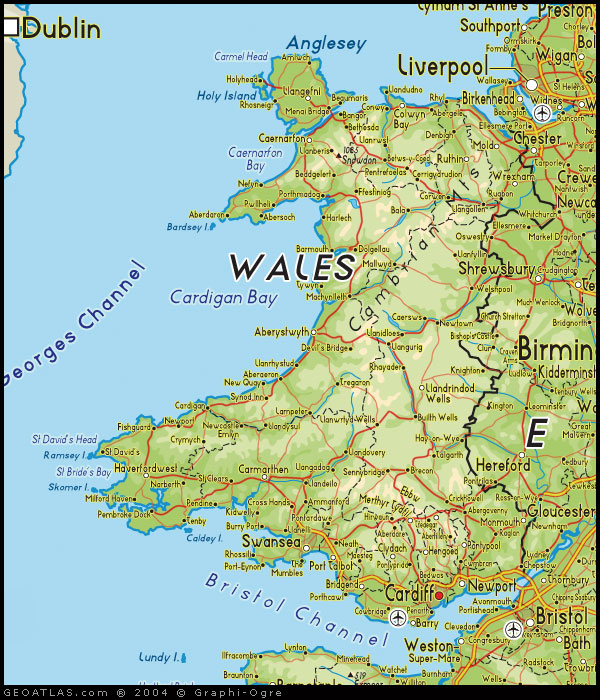
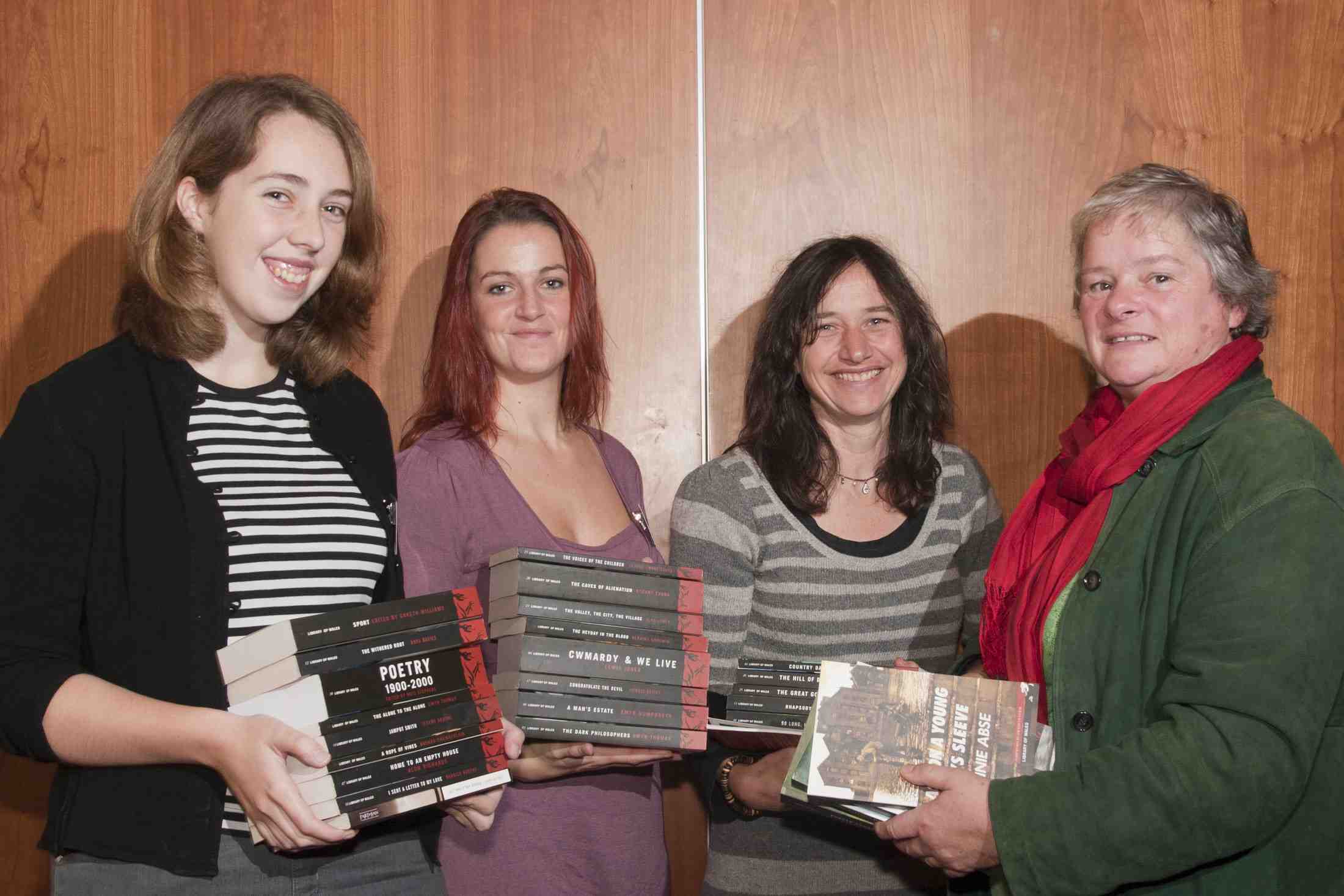 Last Monday, after a smooth sailing to the South East coast of Ireland, we were pleased to be able to donate copies of the complete Library of Wales list to Fionnuala Hanrahan, County librarian of Wexford County Council. We hope that Welsh literature in English will adorn the shelves of the Wexford County library, strengthening the connections that exist in Irish-Welsh literary tradition as far back as Branwen and her singing starling.
 But our reception in Ireland was, unsurprisingly, a little different to that of the mythical Welsh princess. Everybody we met was friendly and welcoming, and the one-day we spent there was filled with examples of Irish-Welsh cultural exchange. The donation of the books was a further, material symbol of a series of literary offerings. Jeni Williams and Bevin O’Connor’s poetry (see below for a taste) and Lewis Davies’ autobiographical prose provided auditory pleasures.
In reply to these readings, the evening showcased Irish, particularly Wexfordian, artistic successes. Elizabeth Whyte - the director of Wexford Arts Centre - arranged for the Welsh party to have a tour of the new Robert Ballagh exhibition at the Wexford Arts Centre - an exhibition specially created in response to the Centre's invitation to Ballagh to join the Wexford Fringe Festival - before going to see the play Lay Me Down Softly by Billy Roche. This tour of the delights on offer in Wexford, from a life-size painting of a naked Fidel Castro wrapped in a red sheet to a fantastic play about the workers at a boxing hall which no one could stop talking about, marks the hugely exciting beginning of the Coracle programme and its many creative possibilities.
What is Coracle?
In the words of the programme administrators, Coracle is a partnership of like-minded people and organisations who have joined together to create and develop a unique cross border series of accessible arts management courses. The courses will offer opportunities to exchange ideas and expertise between creative and cultural arts practitioners, academics, and students.
Coracle is an INTERREG 4A Ireland-Wales 2007-2013 Programme that has come into being with the support of five partners committed to strengthening their creative communities: Carmarthen County Council, Wexford County Council, IT Carlow, the Wexford Arts Centre and University of Wales, Trinity St David. As Dominic was eager to stress, the collaboration relies on creative businesses as well, which will develop and drive on the Irish-Welsh partnerships: Parthian, Library of Wales, Arts Ability Ireland, Buibolg Productions and Iconau.
Why 'Coracle'?
Dominic Williams, once of Parthian Books and now the Coracle Development Officer, took the coracle as a symbol not only of a shared history and of travel across seascapes, but of craftmanship and adaptibility. The coracle is, of course, the means by which fisherman used to move from the sea to their homes swiftly, with their boat strapped to their back. It reflects the skills needed to survive and prosper in the business world.
What will it do?
Coracle will work with universities to create a Cross Border MBA in Arts Management, forging links between Irish and Welsh students, as well as short courses. In terms of the world of employment, there will be festival, gallery and literary exchanges as well as theatre initiatives (especially of Youth Theatre). These exchanges will foster best practice and lead to interchange of skills across disciplines. All of this will be enabled by a cutting-edge Coracle Website and social network.
Back to the Books
The donation of the Library of Wales collection then, marks the beginning of a long and exciting relationship between Wexford and Carmarthen, Ireland and Wales. It also illustrates what the Mayor of Wexford suggested; that being at the coast, the geographical ‘edges’ of a country, doesn’t mean that a place is at “the end of something”, but instead that it is at the beginning of a new kind of relationship. SE Ireland and SW Wales were once defined by the fishing industry, but now they will be defined by art and culture which unite them. I’ll finish the article with Bevin O’Connor’s poem which stands as a symbol of the partnership Coracle hopes to achieve, and the many fruitful literary exchanges yet to come.
Bus Ride To Cork
There are clouds like
Milk bubbles
Blown from a
Childish breeze
As the bus
Slithers on,
The road is a
Pupil stretched thin
Encased
In an iris of
Green fields.
We watch
It dilate, then focus
On the horizon
Disappearing in
The distance
As the eye closes
I look at your face
And it slowly decompresses
Becoming a furrowed
Thread of brow and mouth
I’ve seen that
Physiognomic flatline
Before so I turn away
And look out the window
Toward
Blackening stone
And a man with
A paper face,
Creased at the edges.
Bevin O'Connor
Written by: Eluned
Monday, October 25, 2010
Celebrating the Republishing of the novels of Margiad Evans and Hilda Vaughan
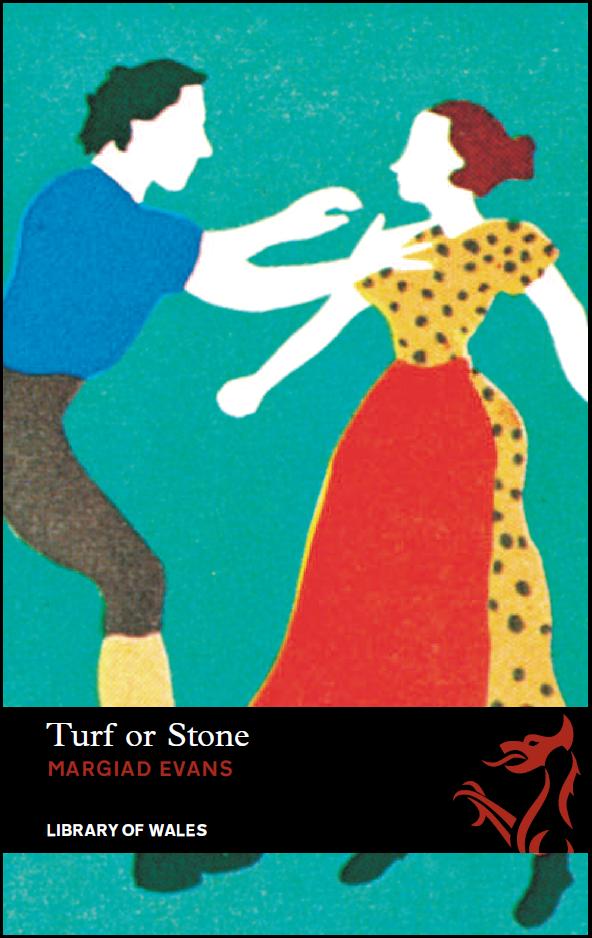 Two of Wales’s best writers from the early years of the twentieth century return to the literary limelight with Library of Wales’ new editions of their most popular works. The novels, Vaughan's The Battle to the Weak and Evans' Turf or Stone tell of passion and intrigue, love and marriage, set against the background of a tough agricultural upbringing in turn of the century Wales.
Also known as the author of ‘The Welsh Wuthering Heights’ Country Dance, Margiad Evans’s third novel Turf or Stone centers on Mary, a young woman who has been forced into an unhappy marriage to the violent and brutal Easter Probert. On her wedding day, Probert lends her his silver ring for the service before cruelly snatching it back and abandoning her on the side of the road to make her own way back home.
Hilda Vaughan’s The Battle to the Weak traces the religious and political divisions of a country in the process of dramatic changes through the lives of a couple, who – like the Romeo and Juliet of their time and place – lie on either side of the religious debate in Wales. This beautiful novel recounts the remarkable lives of Rhys Lloyd, the son of a nonconformist who is galvanized by theories of Social Darwinism, and his beloved, the Church-going Esther.
To celebrate the new publication of these two early 20th Century Welsh classics Parthian and The Library of Wales in association with Chapter Arts Centre in Cardiff will be hosting a discussion on the importance of Welsh women’s writing to be held at Chapter Arts Centre on December 16th at 7.30pm.
Join us there for a glass of wine and a fascinating discussion.
Saturday, October 16, 2010
New from Library of Wales: Mapping the Territory
 Library of Wales welcomes much-needed literary criticism of Welsh Fiction in English.
 The new companion, Mapping the Territory: Critical Approaches to Welsh Fiction in English and edited by Dr Katie Gramich, may be considered as the second stage in the crucial campaign to raise the profile of Welsh writing in English both within Wales and in the wider world. The first stage was the foundation of the Library of Wales series, which was strongly advocated by all academics in the field of Welsh writing in English, whose arguments were accepted by the Welsh Assembly Government, leading to the funding of the series.
Now that a significant body of texts has been republished and is back in the public domain, it is possible for us to use these texts for teaching purposes in universities but we are left with the problem that critical material on these texts is scarce and, in some cases, non-existent.
This publication answers the demonstrable need on the part of undergraduate and postgraduate students for a critical book focusing specifically on a range of Library of Wales titles which will both introduce them to the field of twentieth-century Welsh fiction in English and demonstrate the varying critical approaches that can be used to analyse these texts. A multi-authored work with its origins in the Association for Welsh Writing in English includes essays by both established leaders in the field, such as Professors Knight, Thomas, and Brown, and new, cutting-edge research by young scholars at the outset of their academic careers, such as Morse, Wainwright, and Hendon
Written by: Library of Wales team
Monday, October 11, 2010
Mapping the Territory: An Evening of Welsh Writing in English
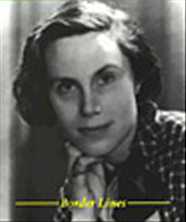 Join us for an evening of discussion celebrating Welsh writing in English, chaired by Dr Katie Gramich of Cardiff University, to mark the launch of Mapping the Territory: Critical Approaches to Welsh Fiction in English. She will be speaking with the award-winning writer Deborah Kay Davies about the history of English-language writing in Wales, focussing, too, on under appreciated women authors of the 20th Century.
 This multi-authored collection, Mapping the Territory, which includes essays from experts in the field as well as the cutting-edge research of younger scholars at the outset of their academic careers, provides much-needed critical commentary on (almost) tragically forgotten texts: texts which helped create the literary landscape of Wales as we know it today.
After the discussion, enjoy a glass of wine with the Library of Wales’ reception celebrating the launch of two early 20th Century Welsh classics. Hilda Vaughan’s The Battle to the Weak and Margiad Evans’ Turf or Stone are beautifully-written accounts of women’s lives in rural turn-of-the-century Wales. Classics of their time, the republishing of Vaughan and Evans' works places them once again in the literary limelight where they belong.
December 16th, 7.30pm, Chapter Art Centre
£5 entrance, including the Library of Wales reception after the discussion
For more information, contact us on eluned@parthianbooks.com
Written by: Library of Wales team
Monday, October 11, 2010
Library of Wales event at the Eisteddfod 2010
 There will be a special event at the Swansea University stand at the Eisteddfod 2010 to celebrate and discuss the Library of Wales.
Wednesday, 4th August, 11.45-12.45
Swansea University stand, Eisteddfod 2010, The Works, Steelworks Road, Ebbw Vale NP23 6YL
‘The Library of Wales’: Promoting, Recognising and Teaching the English Literature of Wales
Speakers
Dr Daniel Williams, Director of the Centre for Research into the English Literature and Language of Wales (CREW), Swansea University
Professor Dai Smith, Raymond Williams Chair, CREW, Swansea University
Leighton Andrews, AM, Minister for Children, Education and Lifelong Learning
Alun Ffred Jones, AM, Minister for Heritage
The session will be held through the medium of Welsh but translation facilities will be available
For more information see The CREW website
Written by: Library of Wales team
Tuesday, July 27, 2010
A memorable Machen weekend in Hay and London
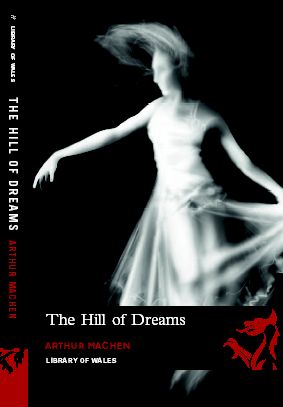 The first weekend in June saw Arthur Machen, father of mystical horror, celebrated across the country, with sell-out events at both the Hay Festival and the inaugural Stoke Newington Literary Festival coinciding with two new Library of Wales editions of his work.
A full house at the Hay library event joined in the discussion of Machen's work with a panel including children's author and poet Catherine Fisher, who has written the foreword to ‘The Hill of Dreams’ for the LoW edition, Gwilym Games of The Friends of Arthur Machen, and Tomos Owen, who supplied the notes to the LoW editions.
Catherine, who lives and works in Newport, told the packed audience how she had been inspired as a student by coming across a volume of the Gwent author's work in the Caerleon College library.
‘The description amazed me. I knew that sunset and that mountain,’ she said. ‘As an aspiring author his account of a writer's struggle was both enchanting and terrifying - was it really this difficult?’
Gwilym Games explained how Machen made the transition from lonely boy wandering the lanes around Caerleon, to the London man of letters who established a cult following around the world, which is still going strong and attracting new readers and writers today.
His tales of bohemian fin-de-siécle London were coloured by the dark and mysterious landscapes of his childhood.
The Great God Pan, his most famous story, was condemned on its first publication in 1894 as decadent and nightmarish. But its mixture of chilling horror and pagan sexuality with contemporary Victorian London, plus Machen’s distinctive and haunting writing style, soon brought him cult status.
H. P. Lovecraft was an early fan, while Stephen King has described it as 'one of the best horror stories ever written'. The new LoW edition also includes the short stories ‘The White People’ and ‘The Shining Pyramid’ plus a foreword by leading horror writer Ramsey Campbell.
Machen also wrote the controversial First World War 'Bowmen' story in which a visionary host of archers is seen fighing alongside the British in the trenches of Mons.
‘There's so much to enjoy and discuss in the works of Arthur Machen,’ said Library of Wales project editor Penny Thomas, who chaired the discussion. ‘It was great to have such a lively launch and explore just a little of this on the day. These new editions are a strong addition to the Library of Wales series.’
The following day, renowned stand-up comic and Machen fan Stewart Lee read an abridged version of the spooky novella ‘N’, set in Stoke Newington, to a spellbound audience of over a hundred people in the appropriately atmospheric surroundings of Stoke Newington International Airport.
Lee discussed his personal fascination with this hugely influential gothic writer and psychogeographer, and told some uncanny tales from his own life.
The steaming hot weather broke just as a key moment in the story was reached. As the protagonist sees a beautiful green park where there should be only streets of terraced houses, summer rain suddenly began to hammer on the roof … almost as if Machen were making himself known.
Jessica Mordsley, the Library of Wales representative in London, said, ‘It was a very memorable event and the perfect setting to introduce Machen to a new generation of readers.’
Gwilym Games, who also edits the Friends of Arthur Machen's magazine Machenalia, added: ‘The new Library of Wales paperbacks make some of Machen's best work easily accessible again in Britain. As a key London writer lauded by Peter Ackroyd and Iain Sinclair, anyone interested in the real mysteries behind everyday London life should read Machen's work. Equally, Machen is part of a long tradition in Wales where his stories can be seen as part of a fantastic legacy stretching back to the tales of Arthurian legend.’
Written by: Library of Wales team
Friday, July 02, 2010
Packed programme of events at Hay
SATURDAY 29 MAY 2.30PM Culture Cymru Tent
Matthew David Scott is a writer, Matthew Jarrett is a music buff. Since November 2009 they have been organising Balloon events, inspired by Donald Barthelme's famous short story Balloon. Evenings of poetry, prose and people playing music. Journalist Susie Wild tracks the two Matthews down at the Hay Festival to find out more.
SATURDAY 29 MAY 5.30PM
Oriel Gallery of Contemporary Art, Salem Chapel, Bell Bank, Hay on Wye
The launch of a new collection of poetry, 'Shield', from Lyndon Davies and an exhibition of the recent work of Penny Hallas who has illustrated the collection.
FRIDAY 4 JUNE 10AM
Oxfam Studio (£5)
Stevie Davies, Elena Moya Pereira, Blake Morrison - Fiction and the Past
'Into Suez' pitches a Welsh RAF family into Egypt in 1949; The Olive Groves of Belchite moves between the long shadows of the Spanish Civil War and the business battles of a global economy; The Last Weekend intrudes escalating rivalry and the past into a summer idyll in East Anglia. They talk to Anita Sethi.
FRIDAY 4 JUNE, 11.30AM
HAY LIBRARY (Free but ticketed)
Catherine Fisher, Tomos Owen and Gwilym Games talk to Dai Smith - Arthur Machen and the Great God Pan
Find out why everyone from Mick Jagger to Rowan Williams to Stephen King to Barry Humphries has a good word to say about Arthur Machen, the gothic writer from Caerleon who became the literary sensation of Victorian London with the publication of his first novel, The Great God Pan. In association with The National Library of Wales
FRIDAY 4 JUNE, MIDDAY
Culture Cymru Tent
BRIGHT YOUNG THINGS: Parthian editor Lucy Llewellyn is in the final stages of editing novels by two debut writers, Tyler Keevil and JP Smythe. At this event the two novelists and their editor discuss the relationship and the process. The two authors will have their debut novels published in Sept 2010.
FRIDAY 4 JUNE, 1PM
LITERATURE POD
Derek Webb will be talking about his fascination with Isambard Kingdom Brunel and how it inspired the writing of his first children’s book Is, which has just been published under our new Troll Carnival imprint.
FRIDAY 4 JUNE, 4PM
HAY LIBRARY (Free but ticketed)
Mario Basini and Rachel Trezise talk to Dai Smith - The Jones Boys and the Real Merthyr
Basini has just written about the Real Merthyr, and also an introduction to Jack Jones’s great turn of the century saga The Black Parade. Trezise’s stories and new novel Sixteen Shades of Crazy portray a new Valleys literature at the turn of another century. They talk to historian and writer Dai Smith about the enduring appeal of one of Wales’ greatest towns.
SUNDAY 6 JUNE, 1PM
Culture Cymru Tent
Creative writing programmes: The Bright Young Output
Young writers Susie Wild, Matthew Andrews and Niti Jain participate in a panel discussion chaired by Dr Paul Wright.
Written by: Library of Wales team
Wednesday, June 02, 2010
Hay Festival 2010
This year's Hay Festival has plenty to offer those interested in the literature of Wales. On Friday 4th June, at 10am, Stevie Davies will be appearing with Elena Moya Pereira and Blake Morrison to discuss fiction set in the past. Stevie's new novel, Into Suez pitches a Welsh RAF family into Egypt in 1949, while The Olive Groves of Belchite moves between the long shadows of the Spanish Civil War and the business battles of a global economy, and The Last Weekend intrudes escalating rivalry and the past into a summer idyll in East Anglia. The authors talk to Anita Sethi.
At 11.30am on the 4th, Catherine Fisher, Tomos Owen and Gwilym Games are talking to Dai Smith about Arthur Machen and The Great God Pan. Find out why everyone from Mick Jagger to Rowan Williams to Stephen King to Barry Humphries has a good word to say about the gothic writer from Caerleon who became the literary sensation of Victorian London with the publication of his first novel. The new Library of Wales edition is published in June.
At 4pm, Mario Basini and Rachel Trezise talk to Dai Smith about The Jones Boys and the Real Merthyr. Basini has just written about the Real Merthyr, as well as the introduction to Jack Jones’s great turn of the century saga The Black Parade. Trezise’s stories and new novel Sixteen Shades of Crazy portray a new Valleys literature at the turn of another century. They talk to historian and writer Dai Smith about the enduring appeal of one of Wales’ greatest towns.
For more information see the Hay Festival website.
Written by: Library of Wales team
Thursday, May 06, 2010
Two new titles from Arthur Machen, the father of supernatural horror
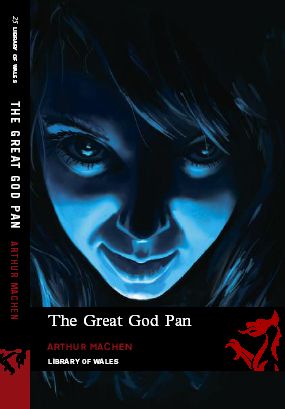
The Great God Pan and The Hill of Dreams by Arthur Machen, Wales’s greatest master of the macabre and the mystical.
Born Arthur Llewelyn Jones in Caerleon, Machen grew up to become one of the most influential and original writers of his generation.
He spent a solitary childhood in the Monmouthshire countryside, exploring the Black Mountains, the ancient forest of Wentwood and the Severn Valley. The wonder and terror that he felt there was at the heart of his work.
He drew on his childhood among these dark landscapes and long-buried pagan remains, interweaving it with his adult life in bohemian fin-de-siécle London, to create magical and often deeply disturbing tales.
Closely associated with contemporaries such as W. B. Yeats and Aleister Crowley, after the First World War he became a star on both sides of the Atlantic, and attracted admirers including H. P. Lovecraft, who described him as one of the four ‘modern masters of the horror story’.
A celebrated figure on the Twenties party scene, he spent money as freely as he earned it. Fortunately, when he found himself hard-up in his old age, a public appeal was set up to to sustain him, supported by T. S. Eliot, George Bernard Shaw, John Masefield, and John Betjeman, among others.
Although no longer a household name, he is cited as a major influence by today’s leading horror and science-fiction writers. Stephen King, Clive Barker, Alan Moore and Neil Gaiman have all emphasised their debt to Machen as ‘the forgotten father of weird fiction’ (The Guardian).
Parthian are excited to be publishing two sensational books by Arthur Machen in brand-new Library of Wales editions.
The Great God Pan
"the most acutely and intentionally disagreeable book yet seen in English" Westminster Gazette, 1894
"an incoherent nightmare of sex" Manchester Guardian, 1894
“one of the best horror stories ever written. Maybe the best in the English language” Stephen King, 2008
A superlatively shocking seminal novella – one of the most controversial stories of the late nineteenth century.
With an introduction by the multi-award-winning novelist Ramsey Campbell, described by The Oxford Companion to English Literature as ‘Britain’s most respected living horror writer’.
The Hill of Dreams
“a dream of a book” Henry Miller, Nexus
A journey from mystical, rural Wales to the decadence and squalor of Victorian London, The Hill of Dreams is a story of a young man’s quest for beauty through literature, love and finally through the spiritual alchemy of drugs and dreams. Originally published in 1907, it is widely regarded as Machen’s finest lyrical work.
This edition includes a new introduction by Catherine Fisher, poet and children’s novelist. Her acclaimed Oracle trilogy, which was shortlisted for the Whitbread Prize, is an international bestseller which has been translated into over 20 languages.
‘To read Machen is to journey into the heart of ecstasy and terror.’ Mark Samuels
‘One of the best horror writers ever… Have you read The Great God Pan? Terrifying.’ Mark E. Smith
‘For ability to create an atmosphere of nameless terror I can think of no author living or dead who comes near to him.’ Jerome K. Jerome
Want to further explore the world of the Apostle of Wonder? The Friends of Arthur Machen is an international literary society dedicated to celebrating and promoting all aspects of Machen’s life and work: from his childhood in Wales and his wanderings in fin-de-siècle London, to his interest in Christian mysticism and the occult, his time as an actor and journalist, the bizarre story of the Angels of Mons, and the ongoing influence of his writing on modern horror and fantasy. Find out more about Machen and the society at the website, where you can also join the free Caermaen email list for the latest Machen news:
http://www.machensoc.demon.co.uk
Written by: Library of Wales Team
Friday, March 19, 2010
"Black Parade" stimulates readers in Barry

 Jack Jones, one of the best loved welsh authors of the 20th Century and his novel The Black Parade is the topic of the evening at Barry Library on the 7th of December. His novels featuring Welsh working class life in the early years of the 20th century sold in their hundreds of thousands in their day with titles such as Off to Philadelphia in the Morning and The Black Parade.
Barry Library has added The Black Parade to its reading club list to mark the publication in the Library of Wales series and local Barry reading group Simply Read have taken up the challenge of discussing the book and inviting popular Welsh broadcaster, writer and journalist Mario Basini, who was born in Merthyr and has contributed a foreword to the new edition of the book, to discuss the work of Jack Jones with them. Mario who has recently published a book entitled Real Merthyr will be joined by Library of Wales publishing editor and fiction editor for Seren Books, Penny Thomas.
Jack Jones was born in Merthyr Tydfil in 1884. A writer of numerous novels, plays and autobiographical volumes, he received several awards for his distinguished contribution to the literature of Wales. He was elected first president of the English section of Yr Academi Gymreig. Jack Jones died in 1970.
The Black Parade
One of Merthyr’s Victorian brickyard girls, Saran watches the world parade past her doorstep on the banks of the stinking and rat-infested Morlais Brook: the fair-day revellers; the chapel-goers and the funeral processions. She never misses a trip to the town’s wooden theatres, despite her life ruled by the 5 a.m. hooter, pit strikes, politics and the First World War that takes away so many of her children.
Her Glyn will work a treble shift for beer money; her brother Harry is the district’s most notorious drinker and fighter until he is ‘saved’. The town changes and grows but Saran is still there for Glyn, for Harry, for her children and grandchildren.
In his 1935 novel Black Parade, writer, soldier and political activist Jack Jones creates a superbly riotous, clear and unsentimental picture of Merthyr life as his home-town reels headlong into the twentieth century.
"Black Parade (1935) is strong because... it includes the many-sided turbulence, the incoherence and contradictions, which the more available stereotypes of the history exclude. It can be properly contrasted with... Richard Llewellyn's How Green Was My Valley (1939)... widely and properly seen as the export version of the Welsh industrial experience."
Raymond Williams
Written by: The Library of Wales team
Wednesday, November 25, 2009
The Raymond Williams Society Annual Lecture and AGM
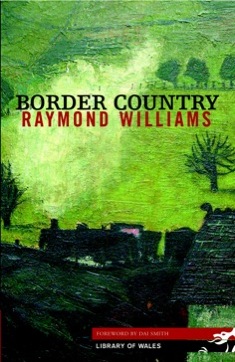 2-5 pm, Saturday, 21st November, 2009
The New Seminar Room, St John's College, Oxford
Featuring:
Professor Simon Dentith (University of Reading): 'Border Country, then and now'
To be followed by the Society's AGM.
Admission: £3 (£2 to students, and free to RWS members).
For more information, please contact Carl Thompson (carl.thompson@ntu.ac.uk)
Download the RWS membership form on the Society's website www.raymondwilliams.co.uk
Written by: Library of Wales team
Tuesday, August 18, 2009
source: Raymond Williams Society
GEORGE EWART EVANS AT 100
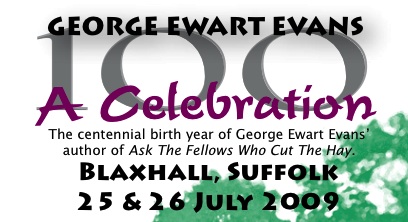 A celebration of George Ewart Evans, author of The Voices of the Children.
Blaxhall, Suffolk
25 & 26 July 2009
£10 per seat, includes a buffet lunch
Contact Blaxhall Archive Group on archive@blaxhall.com or phone 01728 688611 to book.
From the late 1940s onwards, George Ewart Evans was the pioneer in recording and archiving the memories, not of the rich and powerful, but of the ordinary working man and woman. In so doing he helped establish a field of study and method of working which has since found academic respectability in many British universities. George began his work in Blaxhall from 1948 onwards - his source material was the Blaxhall folk that lived around him. This research eventually culminated in his first book about the spoken word, now a classic, called Ask The Fellows Who Cut the Hay, published in 1956 by Faber & Faber.
George was also a prime mover in the creation of the Museum of East Anglian Life based at Stowmarket, Suffolk. By his work and endeavours he helped create a new appreciation in traditional life and local dialect as something to be proud of rather than ridiculed.
Under the auspices of the Blaxhall Archive Group, a two-day event on the 25 and 26 July in Blaxhall is being organised to celebrate the George Ewart Evans centennial year.
The event features:
- One-day seminar on the Spoken Word (some of the finest experts in the country will be speaking)
- Whole day series of film shows (some films not seen since the 1950s)
- One marquee full of local history groups from all over Suffolk
- Another marquee also with history groups plus the East Anglian Music Traditional Trust
- A Memory Marquee with family history information and elders willing to chat and explore your ancestry
- Refreshments and a beer tent on site
- East Suffolk Morris Men on the Saturday
- Steel Quoits league match on the Sunday
- Music on Saturday evening in The Ship
- Sing, Say or Pay at the Ship Sunday from noon
- Displays about George’s life in Blaxhall at the Youth Hostel all weekend
- Launch of Blaxhall’s Creative Past book – All welcome Saturday evening
See www.blaxhall.com/gee/ for more information.
Monday, June 29, 2009
Poetry Sell-out at the London Welsh Centre
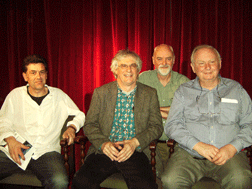 There was a full house of poets, editors and readers at the London Welsh Centre at Grays Inn Road on 22 April for a sparkling evening of poetry and discussion centred on Meic Stephens' 100 years of Welsh poetry in English. Professor Meic Stephens was at his controversial best with strong opinions on the work of, among others, Harri Webb, Alun Lewis and Gillian Clarke. He was joined by the poets Steve Griffiths and Paul Henry. Paul Henry read from a range of work including a superb rendition of Dylan Thomas' Fern Hill, which was particularly enjoyed by Aeronwy Thomas, who was in the audience. Aeronwy has just published a memoir on her childhood and recollections of her father. The evening was sponsored by the London Welsh Society, and we would like to thank Dai Daniel, Fraser Cains and Rita Clark for all their efforts in ensuring the success of the event. And rather unusually for a poetry event, all the available copies of Meic's definitive anthology were sold on the night.
Photo: Paul Henry, Fraser Cains, Steve Griffiths, Meic Stephens
Written by: The Library of Wales team
Thursday, April 23, 2009
Jampot Smith to be adapted for the stage
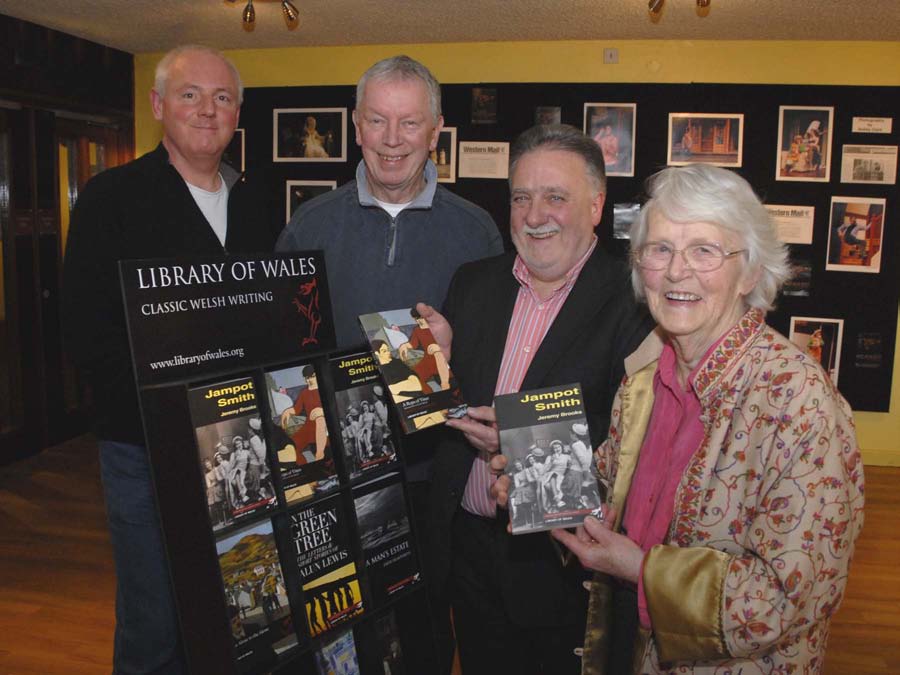 At a reception to mark World Book Day at Clwyd Theatr Cymru, two Library of Wales titles - Jampot Smith by Jeremy Brooks and A Rope of Vines: Journal from a Greek Island by Brenda Chamberlain - were celebrated.
The Library of Wales is a series of classic books that reflect and celebrate the best of Welsh writing, culture and life. Edited by Professor Dai Smith, the series includes work by Gwyn Thomas, Emyr Humphreys, Brenda Chamberlain and Dannie Abse.
The World Book Day reception was attended by Professor Smith, who introduced the two titles, Eleanor Brooks, widow of dramatist and writer Jeremy Brooks, Brenda Chamberlain's biographer Gill Piercy and her estate holder Ravinda Jasser.
Tim Baker, Clwyd Theatr Cymru's Associate Director, announced that Eleanor Brooks has given the theatre the rights to adapt her late husband's novel Jampot Smith for a stage production in Mold.
Professor Dai Smith has been particularly pleased by the reception of the series, with several books reaching the bestseller lists in Wales. He hopes Jampot Smith will similarly become a reborn classic.
He commented, “Jeremy Brooks was a fine writer who deserves to be more widely read. In his comic but touching tale of young love in wartime Llandudno he really captures a moment of time and place in a captivating way. I'm sure people will enjoy this book which is why we are adding it to the Library of Wales.”
Jeremy Brooks worked at Clwyd Theatr Cymru as a dramaturg and translator on a number of prestigious productions, including translations of Maxim Gorky and an adaptation of Medea. He was also Literary Manager of the Royal Shakespeare Company from 1962-69 and his Stratford contemporary, Clwyd Theatr Cymru director Terry Hands who joined the RSC in the mid '60s, welcomed Eleanor Brooks and the re-issue of the novel, which has become the first in the Library of Wales series to be adapted for the theatre.
A Rope of Vines: Journal from a Greek Island, by Bangor-born writer Brenda Chamberlain, is a beautiful and personal account of her time spent on the Greek Island of Ydra in the early 1960s. In the intensity and force of the writing and the eloquent island drawings, A Rope of Vines is a distinguished achievement.
Photo: Tim Baker, Associate Director Clwyd Theatr Cymru; Terry Hands, Director Clwyd Theatr Cymru; Professor Dai Smith; Eleanor Brooks
Photograph: Barry Hamilton
Written by: The Library of Wales team
Wednesday, March 18, 2009
Williams on Smith on Williams
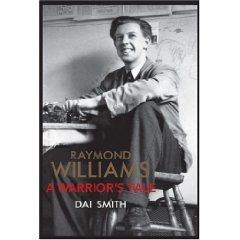
The biography of Raymond Williams by Dai Smith (Raymond Williams: A Warrior's Tale ) in which his progress towards the writing of Border Country is a major theme has been highlighted by Rowan Williams, The Archbishop of Canterbury in an article on his books of the year in the Times Literary Supplement.
"Dai Smith’s account of the first forty years of Raymond Williams’s life (Raymond Williams: A Warrior’s tale, Parthian) was my favourite biography of the year, drawing out the great critic’s passionate struggles with how to write his own life, in fiction and theory and political analysis; a completely engaged, imaginatively dense study of someone who was with good reason a sort of moral touchstone for one important strand in the British Left..." Rowan Williams
Written by: The Library of Wales team
Friday, December 12, 2008
source: The Times Literary Supplement
Library of Wales Events Attract Crowds Across Wales
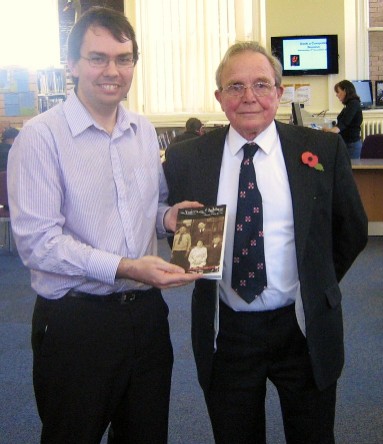
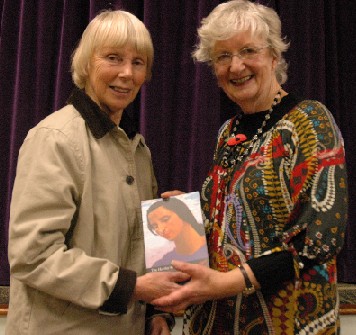 The run-up to Christmas 2008 has seen many successful Library of Wales events across the country. People are taking a real interest in the books, and we thank you for your continued support which makes the series possible.
Voices of the Children and George Brinley Evans at Neath Library
Neath Library was the venue for a packed event with George Brinley Evans in discussion with Library of Wales series publisher Dr Richard Davies.
Writer and artist George Brinley Evans has written the foreword to The Voices of the Children by George Ewart Evans which was recently added to the Library of Wales series. George talked about his relationship with the author who visited the Neath Valley in the 1970's to research a book entitled From Mouths of Men. His encouragement led Evans to write fiction of his own, which would eventually develop into his books Boys of Gold and Where the Flying Fishes Play.
Voices of the Children is set in a rural mining village in South Wales in the years leading up to the Second World War. George Ewart Evans has recreated a world that will resonate with our memories, real and imagined, of childhood.
The picture above shows George (right) with Paul Doyle, Reader Development Officer for the Neath/Port Talbot libraries.
The Heyday in the Blood at the Powysland Club
Mary Oldham held a talk on the life and work of Geraint Goodwin at the Powysland Club, not far from where Goodwin was born. The audience discussed whether Goodwin has received the recognition he deserves, and listened to readings from The Heyday in the Blood.
The Heyday in the Blood, is a passionate story of young love and follows the wilful Beti as she makes some life-changing decisions.
Goodwin's daughter Myfanwy Lumsden attended the event and the picture shows Myfanwy (left) being presented with a book by Mary Oldham.
Written by: The Library of Wales team
Tuesday, November 11, 2008
Sporting Times
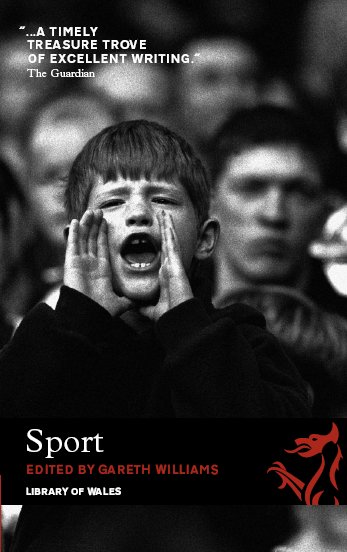 The Library of Wales has published an anthology of the best of Welsh sports writing. Here the man behind it gives a taster of some of the gems it holds
AS a 10-year-old schoolboy growing up in Barry, my literary role models were Robert Louis Stevenson, Rider Haggard and JBG Thomas.
By the time I got to university I had moved up a few gears: Dostoevsky and Herman Melville now headed my list, but I still couldn’t shake off the influence of the Western Mail’s chief rugby writer.
JBG’s pulsating account of the Lions’ first Test in South Africa in 1955 still vied with young Jim Hawkins’ threat to blow Israel Hands’ brains out as one of the most gripping pieces of narrative I had ever read.
By now too – this was the mid-60s – Clive was kicking, Lynn was leaping, and the great Ali was floating and stinging, but nothing I read seemed to capture the essence of their heart-stopping drama, their meanings or their significance, to an audience in the Wales I knew that was passionate about sport.
Ali’s brilliance would soon be elucidated by a fistful of serious American writers, headed by the bruising Norman Mailer, but nearer home, my historian’s instinct was that a mix of restrictive social and cultural factors had hindered our leading Welsh writers from embracing sport as part of their creative landscape to quite the same degree. Right?
Wrong. As I began working on my “sport” anthology, commissioned for the Welsh Assembly Government’s Library of Wales, I soon found further confirmation of what I had in fact long known.
There was writing on Welsh sport that was vivid and resonant – the poems and memoirs of Bluebirds fan Dannie Abse, Leslie Norris’ poignant evocations of Merthyr’s unique boxing culture, the powerful novels of Rhondda’s Ron Berry, the brilliant short stories of Alun Richards, the stylish journalism of John Morgan and Geoffrey Nicholson, and the perceptive gaze of outside observers such as John Arlott and Hugh McIlvanney.
In my anthology you will find celebrants, cynics and critics, songsters and storytellers, balladeers and brawlers.
Naturally the major spectator sports are well represented, sometimes in unexpected fashion – a John Toshack poem, not about him but by him – other times in the imaginative reconstructions of novelists such as Richard Llewellyn, Alexander Cordell and Emyr Humphreys.
And don’t think this is solely a male preserve. Watch prize-winning poet Sheenagh Pugh clear the snooker table, read Gwyneth Lewis on golf and Western Mail columnist Carolyn Hitt on Joe Calzaghe, pictured – some palpable hits there all right.
The volume actually kicks off with one splendidly vitriolic anti-Welsh outburst, but thereafter the mood is more festive: no doubting Thomases, only Dylan, Gwyn and, yes, JBG on that first Test in 1955.
It wasn’t finding material to include that was difficult, but what to leave out.
Was there room for Dai Smith’s memorable description of the kicking Clive – the exhorting, hectoring, chivvying, wily top cat of Cwmtwrch – as “this Welsh Bilko”?
Library of Wales series editor Dai may be, but no, there wasn’t. What about the leaping Lynn? Gerald Davies, as incisive on paper as he was on the wing, rounds off a tribute to one of our greatest athletes, “In Tokyo’s gloom Lynn Davies left the vivid air signed with his honour.”
Nice one, Gerald; you’re in.
Here are dogs and darts, fur and feathers, climbers and cricketers, two- and four-legged runners, racers on wheels and in the water, speedsters on sand and in the sky.
And there’s one gem here you will discover for the first time, an unpublished short story by our foremost cultural critic Raymond Williams.
There has long been a need for an anthology of Welsh sports writing that would reflect the best of it. Here it is.
Sport: An Anthology, edited by Gareth Williams, is published by Parthian Books for the Library of Wales, £9.99. Gareth Williams is Professor of History and Director of the Centre for Modern and Contemporary Wales at the University of Glamorgan
Written by: Gareth Williams
Saturday, November 17, 2007
source: Western Mail
web site: icwales.co.uk
Giving A voice to Forgotten Authors
 Giving A voice to Forgotten Authors
Professor Dai smith has one of the most impressive CV’s in Wales. He talks to Cathryn Ings about his latest role as editor of a new series of forgotten classics of Welsh literature.
Professor Dai Smith has had many distinguished careers. Most people would have been proud to have done one of the jobs he has done and excelled in. Check out his CV- Prof Smith is currently the Raymond Williams Chair in the Cultural History at Swansea University.
Before this he was Pro Vice Chancellor for Research and Generation at the University of Glamorgan.
He was editor of BBC Radio Wales and Head of Programmes (English Language) at BBC Wales from the early 1990’s to the year 2000.
There was another professorship before this, this time at Cardiff University.
Prof Smith has a BA from Oxford and an Ma from Columbia University, New York.
He has recently (and controversially) been appointed interim head of the Arts Council for Wales.
Quite a distinguished career, you might say.
“I’ve been lucky, in that sense” said Prof Smith. “It’s been partly luck that in Wales, maybe in cultural terms, you tend to do more than one job because there aren’t that many of us that have gone around really talking about Wales.”
Prof Smith’s most recent project is editing the new Library of Wales series.
This is a selection of classic Welsh books written in the English language that have gone out of print.
In this Assembly-backed initiative, the books have been re-printed with trendy new covers so they can be made to a generation of new readers.
They include the boxing classic So Long, Hector Bebb by Ron Berry; Border Country by Raymond Williams, The Dark Philosophers by Gwyn Thomas, and industrial classics Cwmardy and We Live, by Clydach Vale author Lewis Jones. Each of the books has been given a new introduction, written by a well-known public figure.
Popular urban novelist Niall Grifiths introduces So Long, Hector Bebb; Prof Smith himself has written the foreword to Border Country; Elaine Morgan, author of The Aquatic Ape, introduces The Dark Philosophers, and Hywel Francis, Aberavon MP, introduces Cwmardy and We Live, which are published together for the first time.
The series, published by leading Welsh independent publishing house Parthian, is edited by Prof Smith.
A set of the books has been given free to every secondary school in Wales.
“I think I was personally involved because, although I am a historian, I’ve written extensively about literature written in English about Wales, so it wasn’t exactly a million miles away from where my interests have lain,” he said.
“The actual impulse was that the Culture Committee of the Welsh Assembly Government was taking evidence about the provision of English language writing in Wales.”
“They were increasingly persuaded that there was insufficient- not so much for contemporary writing but for classics.
“I don’t like the term classics because it sounds a bit off-putting,” said Prof Smith. “They are really works which, I think, are of significance about Wales, mostly written in the last century, mostly written by Welsh people, but which are either currently unavailable or out of print.
“If a classic is Dylan Thomas or RS Thomas, Dannie Abse or even How Green Was My Valley? They wouldn’t be rushed into print by the Library of Wales because they are already available.
“So it’s complementary to the work that is elsewhere. The women’s press Honno, for example, they have done terrific work in bringing women’s literature back into print.”
So of all the out-of-print Welsh classics available, how did Prof Smith choose to publish first?
“I was asked by the minister Alan Pugh if I would look into the feasibility of a Library of Wales-what did it mean, what would it cost, was it sustainable and so on,” Prof Smith explained.
“I convened a small committee-experts in the field-we met and rapidly came up with 40 or more books. There were technical issues such as who owns copyright, how much does it cost, what should we do first.
“It was a little bit of a lottery as to what books came out of the shake first.
“But my own personal opinion is that Border Country by Raymond Williams is one of the finest novels written in English in the 20th century in Britain, let alone Wales. And it hasn’t been in print for about 10 or 15 years. So it was an obvious choice for me, particularly as I’m writing about Raymond Williams.
“Country Dance by Margiad Evans, is a wonderful, beautiful-looking little book-it has been described as the Welsh Wuthering Heights. And it was a prominent novel by a woman.
“Lewis Jones (author of Cwmardy and We Live) is really there because we took the bold decision to put the two together. They are works of some impact.
“Gwyn Thomas’s The Dark Philosophers is three novellas, one of which I think is a European masterpiece. Gwyn taught me in school, and I’m a great admirer of his.
“So Long, Hector Bebb was chosen because it was ready and available.
So what sort of response has the Library of Wales received from the book buying Welsh public?
“It’s been terrific- we have been thrilled with the response so far. Apart from the launch in Cardiff and then in New York- where up to 1000 copies of two of the volumes have been taken- the public response has been amazing.
“We’ve printed everything, I think, twice, and Border Country by Raymond Williams has gone into its third re-print which means 3,500 to 4,000 copies. I think this is unprecedented in Anglo-Welsh publishing.
“We hope that this will continue for the next 10 years and we will rise to 100 books.
“I think they have received a good critical attention, but my dream is that they get a good popular reception and, so far, with the first five, people are buying them.”
So does Prof Smith feel Welsh classics in the English language have been overlooked in the past?
“It’s not so much that they have been overlooked but that when their moment ended, unlike comparable works of Scottish, Irish, certainly English literature, they haven’t been kept, even in a niche area.
“I accept the word “overlooked” if it means we can bring them back into sight.”
Prof smith was born in Tonypandy. He went to Balliol Collge, Oxford where he studied History and then on to Columbia University in New York to study literature.
“It was supposed to be for a year, but I was there for four years.”
At this point, in the late 1960s, Professor Smith was sent a book on Merthyr working class history edited by Glanmor Williams from Swansea University.
“I was so entranced by this I felt that I really wanted to come home,” said Prof Smith.
“I wanted to work in that field so I came to Swansea, which I didn’t know as a town. I deliberately went to Swansea to do my PhD because it was undoubtedly the centre for the new social history of Wales.
“I loved Swansea, I had a fantastic time there. I thought the city was incredibly beautiful then, I still do.”
Over the years Prof Smith’s work has taken him away from Swansea but now he’s back again. He works at the centre for Research into the English Literature and Language of Wales (crew) at the university.
“My job initially will be to write my work on Raymond Williams, to bring into print two of his unpublished works- precursors to Border Country- which I discovered in his papers.”
Prof Smith has been working on Raymond Williams papers, which have been deposited at Swansea University, for several years.
So what is the fascination with Raymond Williams?
“It’s two-fold. When I first came across him, I must have been in school. Williams was born in 1921 in Abergavenny. He was the quintessential working class scholarship boy who goes to Cambridge because the school masters sent him.
“He took a long time to discover that not only does his climbing the ladder out of his class not satisfy him politically in terms of his beliefs, but also that it is part of a wider British pattern of cultural dislocation of working class boys and girls which has been going on since the industrial revolution.
“He breaks the back of narrow literary studies” Prof Smith continued. “He more or less invented-he was certainly at the forefront- of what could be called cultural studies in the 1960s and 1970s.
“And he does it in a way which is very personalised from his experience. And to that I could relate personally but I can also relate to it intellectually.
“The second reason is that he is a novelist. To anybody who has not read Border Country, I would say it is a work which is both lyrically and intellectually challenging. It is a wonderful novel.”
Prof Smith got to know Raymond Williams quite well. “I liked him a lot. He was very different from your gung-ho Valleys Welshman. Very different from me. He was rather quiet and certainly not your verbose, eloquent short-arse.
“A man of his great integrity- he sustained his arguments throughout his life. I think he is one of the great, great intellectual figures of the 20th century. I think he is of European and even world stature.”
Prof Smith is obviously dedicated to Welsh literature and believes it has an important role to play in the future of Wales.
“You can’t have a society that develops and evolves if it doesn’t posses a sense of itself. And that sense of itself has to be, in the end, historical. But that history is conveyed in all sorts of ways- in architecture, by painting, by music, by popular memory and by writing about Wales.
“It is the memoirs, diaries, autobiographies, poems, plays, and, above all else, short stories and novels that show us how Welsh life was experienced. Not how we would study it but how we experience it. That is the poem of Wales that I have always wanted to express.”
As well as literature, Prof Smith has another great love- sport.
“Like most South Walians! My wife says I’ll watch anybody kicking a ball and it’s true. I was a big rugby fan and I love soccer as well.”
He has co-written, with old friend Gareth Williams, a book on rugby- Fields of Praise, which is a history of the Welsh Rugby Union. Fields of Praise went on to win much critical acclaim and scooped several literary prizes.
“It was a very daunting book to write but very exciting,” said Prof Smith.
“When I ask if there is anything else he’d like to accomplish in his life he says: “Play outside half for Wales!”
If anybody can do it, Prof Smith can!
Written by: Cathryn Ings
Thursday, July 13, 2006
source: South Wales Evening Post
web site: http://www.thisissouthwales.co.uk/southwalesnews.html
Mario Bassini Interviews Richard Davies about the Library of Wales and Parthian
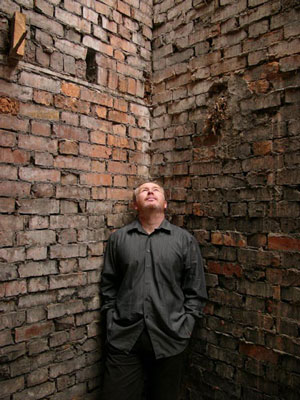 From nothing, Richard Davies has grown his Parthian Books into one of the most innovative and regarded publishers in Wales. Here, he tells Mario Basini how he has an even more revolutionary plan for out-of-print novels.
Publisher Richard Davies brings a first-hand experience to dealing with the trials and tribulations of his authors. As a novelist and playwright he has lived through the long years of poverty and struggle a writer often needs to establish a reputation.
He worked as a labourer on a building site to finance his first books.
His publishing career grew out of a problem he shared with most young writers-how to get your work into print. When he could not find a publisher in London or Wales for his first novel he published it himself, hawking it around Wales’ bookshops.
The company he founded then, Parthian, has become one of the most innovative book publishers in Wales. It has established a cutting-edge reputation for rooting out promising talent. Among those whose work first appeared in his lists is Rhondda-born Rachel Tresize whose astonishingly raw and powerful memoir, In and Out of the Goldfish Bowl won her an Orange Futures Prize. She was still in her teens when she wrote the book.
Parthian has done much to promote the work of an emerging group of short-story writers. It has brought some of our best and most neglected playwrights a new audience by publishing their texts. Now, along with others in Wales, it is pioneering new links with the literature of Europe and the World.
It will soon be launching a new translation of Under the Dust, a novel by the Catalan writer, Jordi Cocoa, at a press conference in Barcelona. It tells the story of a boy growing up in the city under the dictator Franco.
At the beginning of June in the same city, Parthian is launching The Colour of a Dog Running Away, by Richard Gwyn, its poetry editor. It is a vibrant, poetic evocation of a love affair set in the Catalan capital. Its author speaks Catalan.
A chance meeting at the Frankfurt Book Fair between Richard Davies and the publisher Keri Hulme, the New Zealand winner of the 1985 Booker Prize, could lead to Parthian publishing a book of Maori short stories. It will be edited by Hulme, the author of The Bone People.
“He saw that, like his company, we produce collections of short stories,” recalls Richard Davies as we sit in a bar with a panoramic view of the breathtaking Teifi estuary near Cardigan. “So he said, ‘let’s do a book together’.”
Parthian has also pioneered English translations of major Welsh-language writers. From Empty Harbour to White Ocean was Robin Llywelyn’s own translation of his book O’r Harbwr Gwag I’r Cefnfor Gwyn which won the national Eisteddfod prose medal at Neath in 1994.
The company Richard Davies ran with his artist wife Jill, doing everything from writing the books to designing them and selling them out of a suitcase, now employs half-a-dozen people. They include a fiction editor, a poetry editor and a marketing manager.
Davies and Parthian have just clinched what could be the most important opportunity in the short history of English-language publishing in Wales. It has won the contract to publish the Library of Wales which will be funded by the Welsh Assembly.
The library, edited by historian and literary critic Professor Dai Smith, will bring back into print a series of 20th century classics written in English which are currently out of print and/or extremely difficult to obtain.
The aim is to restore to the reading public some of the key texts which shaped the unique contribution made by the English-language literature to Wales and the world. The open-ended commitment could run into scores of books.
Dai Smith and his panel of five have already chosen the first 20 titles to be resurrected.
They range from books by major literary figures such as Gwyn Thomas, Rhys Davies, Alun Lewis, Glyn Jones, Emyr Humphreys and Jack Jones to lesser known novelists and short story writers whose work has all but slipped from our collective memory.
The second category includes men like Geraint Goodwin George Ewart Evans and, perhaps, Lewis Jones.
According to Dai Smith, the library should prove that Welsh writing in English in the 20th century can compare with anything produced by Ireland, Scotland or England. “What we have here is a superb European literature that is largely unknown, even in Wales,” he said as he unveiled the library’s first 20 titles. He added that it would allow the people of Wales “to have a sense of themselves.”
According to Richard Davies, there will be a more specific benefit to the creation of the library.
“I think Wales will produce better writers as a result of the publication of these books,” he says.
“There are some authors you need to read to help you develop as a writer. Previous writers can help you explore where you are from in literary terms and help to shape your work.”
He mentions the miner-writer BL Coombes who, in books like These Poor Hands, described his life in the coal industry in the Neath Valley. “It would have been interesting for me as a 15-year-old growing up in the same valley to read his books. But I only learned about him in the last four or five years,” Richard Davies says. As the grandson of a miner, Coombes’s work has direct relevance to his life.
Every school and college in Wales is expected to take copies of the Library of Wales books. But, if it is to achieve its purpose, it will have to sell well to the general public.
Pricing, design, and marketing will play crucial roles in ensuring the popularity of the books. Parthian has priced each of the first books at a very reasonable £6.99.
The first five in the series will be published in January next year. They will include the novel Border Country, written by the influential philosopher and critic, Raymond Williams. Another will be So Long, Hector Bebb by the Rhondda author Ron Berry, a novel which explores the dangerous world of boxing in South Wales.
Each book will be introduced by an enthusiast. In Ron Berry’s case, the prize-winning novelist Niall Griffiths will provide the induction.
Niall, whose novel Stump won last year’s Welsh Book of the Year title, has publicly acknowledged his debt to the Rhondda writer.
The covers of these first will be bold and starkly modern. They will often be built around eye-catching, sombrely realistic black and white photographs. They demand a modern audience for these classic texts and they help to give the books an immediacy which dispels any lingering misgivings that they are ghosts conjured up from a dead tradition.
Richard Davies, 38, is the son of a Neath builder. He lives in a large and imposing house with Jill and their children Tai, eight, and Ella, five, in the centre of Cardigan. It is, not surprisingly, full of books and Jill’s vibrant, arresting paintings.
He loves the sociability of publishing in which he meets a stream of very different but like-minded people. He delights in discovering and encouraging new talent and seeing it in print. He has often backed it with his own money without the benefit of grants.
He has inherited a business talent from his father and enjoys writing complex business plans. His ambition is to grow the company beyond the confines of Wales or the United Kingdom. And he has the vision to achieve that ambition. There are precedents. He points to the Scottish-based companies like Cannongate which have won international reputations.
He has already put into place a network of distributors enabling him to sell books in the United States as well as Europe.
“Our challenge as publishers is to promote our authors and win a larger audience for them. We have to try to be a company with a world perspective, to sell books in numbers in the States and in Europe.”
The difference between being a small provincial company and one with international clout can rest on the success of a handful of books.
“You can turn things round and earn a place in the international market with two or three successful books” says Richard.
He admits that he needs to lay his hands on more good books which have the chance of selling all over the world.
Some years he may handle just one or two books with that potential. “What you need is five or six a year so that you can promote them heavily. Then one might take off.”
His enthusiasm for publishing is obvious. But he is determined not to neglect his first love, writing. He is a past winner of the Rhys Davies short story award. His first novel, Work, Sex and Rugby, written in 1992 under the pseudonym he uses as a writer, Lewis Davies, is a rite of passage story describing one young man’s story through a weekend of booze, rugby and women. Two years ago it was voted the best book to describe Wales in a poll organised to coincide with World Book Day.
A later novel, My Piece of Happiness, a sensitive and moving account of a social worker’s relationship with his handicapped charge, won critical acclaim. He has also written a number of plays, sometimes adapting his novels for the stage. He has just finished a political satire which updates the story of King Arthur’s Camelot by relocating it to Blair’s cabinet.
Richard Davies believes he can juggle the demands of running an expanding business with those of being a successful writer in at least two very different fields. He already has the next decade of his life mapped out.
During that time he will not only steer Parthian to further success. He will write at least two novels, one of which could be a thriller, and have a play produced on the West End stage. It would take a brave man to bet against him.
Written by: Mario Bassini
Monday, August 01, 2005
source: Western Mail
Library of Wales launched to great acclaim
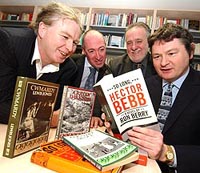
 A major development in the Library of Wales project was announced today with the appointment of Cardigan publishing company Parthian as the publisher for the series.
The Library of Wales is an ambitious project that will bring back to print a long list of English-language classics from Wales. Aimed at the general reader the initial list of titles will include volumes by Gwyn Thomas, Raymond Williams and the Rhondda writer Ron Berry. The first five books in the series will be published in January 2006.
'Too many of the best works by Welsh writers have been out of print for too long,’ said Kirsti Bohata on behalf of the Welsh Books Council who will oversee the project. ‘This high-profile project is intended not only to encourage greater educational take-up of these important books but to make an immediate impact on the public imagination in this country and abroad. We are confident that the publicity surrounding the project will also be seen as a further boost to Welsh Writing in English.’
The concept of the Library of Wales series was initially discussed during the National Assembly’s Culture Committee review of Welsh Writing in English and it is supported by additional financial funding from the Welsh Assembly Government. Alun Pugh, the Minister for Culture, Welsh Language and Sport, said: ‘The Library of Wales is a great opportunity for us to celebrate our literary heritage. These books are not remote, academic studies, but works of popular interest that will appeal to readers on many different levels. The Library of Wales will revive interest in our literary classics as well as giving fresh impetus to promoting new English-language writing from Wales.’
Professor Dai Smith will act as the Series Editor on the project, directing the list and commissioning special introductions for each book. He said, ‘The Library of Wales will keep in print the English-language literature of Wales in ways that will connect our past to our present. It will be an essential tool in the self-understanding required to build an emergent Wales. The world will note how we now sustain our common memory through literature and will share in our riches.’
Dr Richard Davies, Managing Director of Parthian added: ‘We are delighted to have been awarded this major project and look forward to the challenge of publishing a landmark series of books that represent some of the best writing produced in Wales. These are good books and we want them to be read and enjoyed.’
Written by: Elwyn Jones
Sunday, September 25, 2005
source: Welsh Books Council
web site: www.cllc.org.uk/whatsnew_librarywales.htm
email:
elwyn.jones@cllc.org.uk
|
|
|
|
|
|
|
|
|
|
|
|
|
|
|
|
|
|
|
|
|
|
|
|
|
|
|
|
|
|
|
|
|
|
|
|
|
|
|


